
What is a drug?
Asking for a friend...

CodeRx knows a lot about drugs (pharmacy drugs, relax) and we even launched the CodeRx Drug Database earlier this year. So I’d like to think we know what a “drug” is. Do you? Recently, I’ve heard a lot of people using the word “drug” for things I don’t really think of as drugs, so I wanted to take a moment to clear a few things up.
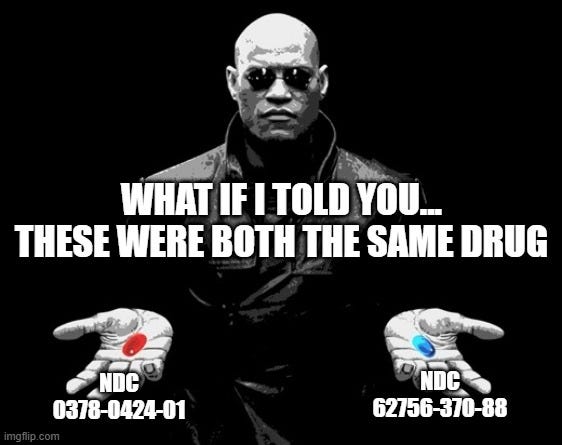
This is getting into semantics a bit - but that’s kind of the point. If we can lock down a common language to use when talking about drugs, it makes drug terminology and pharmacy analytics a lot more straightforward. So let’s dive in.
Is this a drug?
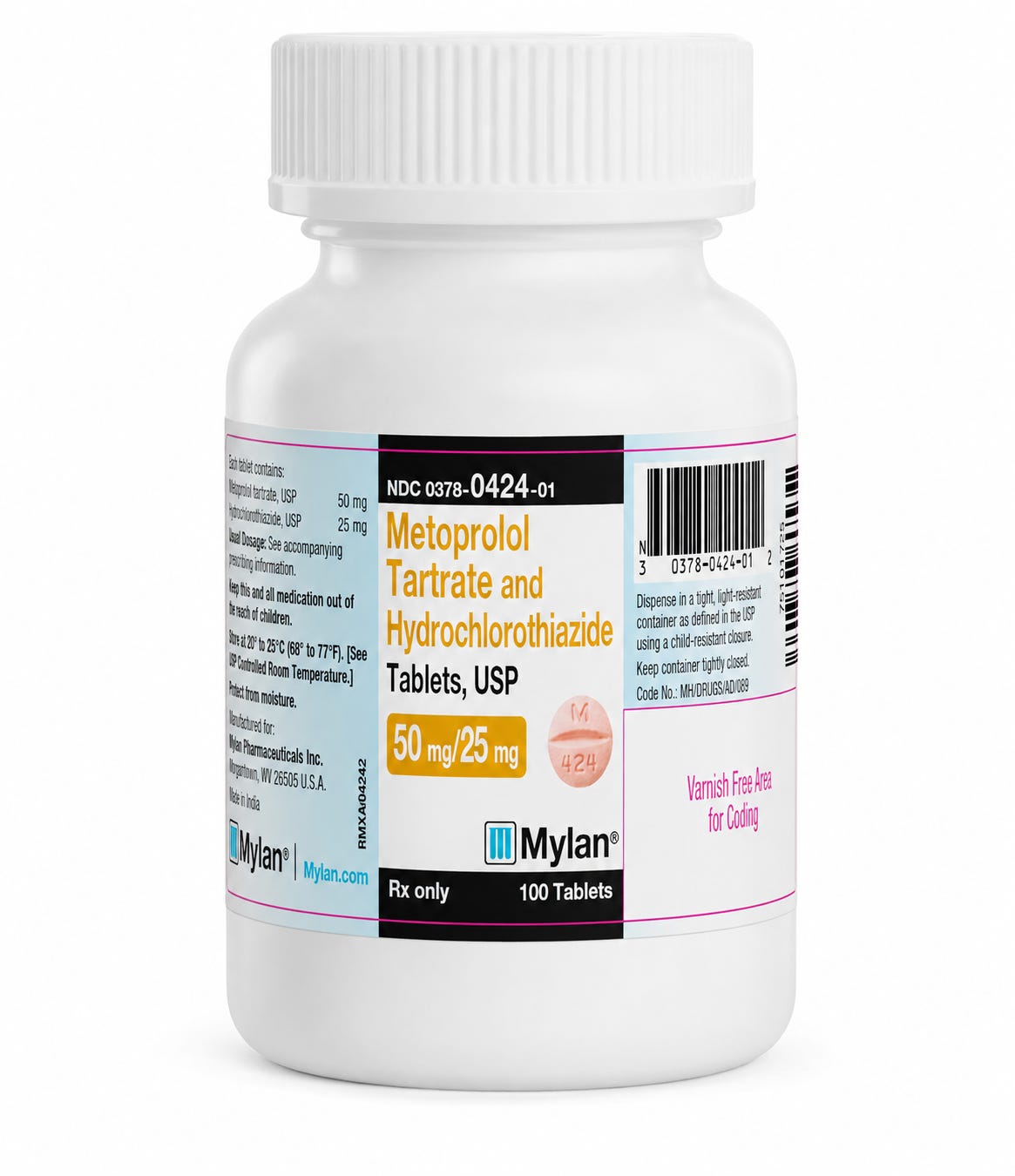
I mean… it contains drugs… but this is essentially a label that goes on a carton or a bottle or a vial or etc... It represents a specific packaging of a product made by a manufacturer (or a relabeler - but we won’t go there). For instance, this is a label for a drug product in a 100-count bottle manufactured by Mylan Pharmaceuticals, Inc..
In the CodeRx Drug Database, this is a ✨package✨. It is a package that contains a drug product generally created by a manufacturer. Without a package and a label, there would just be tablets and capsules and liquid and powder strewn about a pharmacy. It would be chaos! But alas, this is not the drug you’re looking for.
Packages are the source of National Drug Codes, or NDCs, which represent drugs but also more - like manufacturer and pack size as discussed above. NDCs are a many-to-one relationship to drugs.
What about this?

Kind of? If your doctor wrote a prescription that ONLY said this without any other information, how would the pharmacy know what strength to fill? If this was available in multiple dose forms (like fluticasone which can be a nasal spray, a topical cream, or an inhaler) how could the pharmacy be sure which one you needed?
In the CodeRx Drug Database, this is an ✨ingredient✨. Technically an active ingredient, but we won’t split hairs. You might argue that’s two ingredients. Go ahead and separate the metoprolol tartrate from the hydrochlorothiazide in a manufactured tablet. I’ll wait.
You’re not wrong, though. This product happens to come as a multiple ingredient tablet (i.e. metoprolol tartrate AND hydrochlorothiazide in a single tablet).
Which raises a few questions. If you take two different single ingredient tablets (metoprolol tartrate in one, and hydrochlorothiazide in another) I would say you taking two drugs, right? But if you take one multiple ingredient tablet (metoprolol tartrate + hydrochlorothiazide in one tablet) are you taking one drug? Or two drugs?
The CodeRx Drug Database handles this ambiguity by starting with ingredients at the highest level and mapping to one or more individual ingredient components. In this example, the ingredient is “metoprolol tartrate AND hydrochlorothiazide” and the ingredient components are 1.) “metoprolol tartrate” and 2.) “hydrochlorothiazide”.
…OK technically the ingredient components are 1.) “metoprolol” (with a precise ingredient of “metoprolol tartrate”) and 2.) “hydrochlorothiazide”… But I digress…
OK surely this has to be a drug...

You got it!
Really?
Nah, just kidding. This is not much closer to a drug than an NDC (or package). This is what I (and the FDA) would consider a drug product. A manufacturer might have one NDC per product, OR they might have multiple NDCs per product with different pack sizes (i.e. one NDC for a bottle with 100 of the tablet above, and a different NDC for a bottle with 500 of the tablet above). Overall, there will never be a one-to-one mapping of NDC to drug - it will always be many-to-one.
Because drug products are closely synonymous with drug packages, the CodeRx Drug Database doesn’t formally recognize them, and prefers to use packages (NDCs) which give the full picture of a manufactured product that pharmacies can actually purchase.
We are still able to map to product-specific by data using the first 9 digits of the NDC in NDC11 format. For instance, while the active ingredient is the same between products, the ✨excipients✨ (inactive ingredients) are likely different. Inactive ingredient data is mapped to packages using this 9 digit NDC method.
Fine I give up.
Oh come on, you were so close.
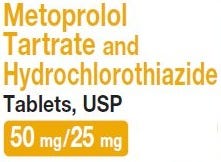
Now THIS is a drug. This is what RxNorm refers to as a “semantic clinical drug” or SCD. CodeRx isn’t as fancy as that so we just call it a ✨drug✨. A drug is something a doctor can prescribe, something a pharmacy can fill, something a patient can have on their medication list.
A drug consists of three things:
An ingredient (metoprolol tartrate and hydrochlorothiazide)
A strength (50 mg / 25 mg)
A dose form (tablets, USP)
The CodeRx definition of a drug is kind of like the “idea” or “concept” of a drug - not an actual physical drug “product” that you can hold in your hand. It’s like if you could look at a pill in some weird pharmacy-centric version of The Matrix and the little green ones and zeroes flowing around everywhere revealed what was truly inside… hence the Morpheus meme up top.
The “concept” of a drug allows you to normalize many different NDCs to a single drug, and then aggregate even further down the hierarchy of ingredients and ingredient components - or to filter drugs by dose form or strength. And by using open, standard drug identifiers for the drugs in our database, it allows you to group them by open, publicly maintained drug ✨classes✨ such as ATC.
Because drugs can be brand OR generic (an important distinction for analytics, supply chain, purchasing, etc), we store both as separate concepts in the CodeRx Drug Database. However, we always provide a mapping from brand drugs to their related “clinical drug” equivalent. Because regardless of whether some pharmaceutical company holds (or held) a patent on a particular drug, at the molecular level, it should be doing the same thing clinically in your body.
Do you work with drug data?
If you want to share some pain points you’re feeling when working with drug data and see how we can help, we’d love to chat with you and even demo our database for a given use case. Please feel free to contact us or use the button below to book a demo. If you want to dive a little deeper, check out our docs.
We can help make it make sense, with or without the use of memes. Drug data doesn’t have to be complicated, and we try to make it as simple as possible (but not simpler). The CodeRx Drug Database makes it easy to navigate the concepts above and offers so much more for people that need reliable drug data updated every week.